 Navya
NavyaDelhi’s air quality crisis has deepened, with visibility dropping sharply as thick smog blankets the city. Recent AQI readings remain in the Severe zone, shooting to 600+ in some, showing how pollution is not just worsening air quality but also obscuring skylines, roads, and daily life. With pollution showing no signs of easing, authorities have imposed GRAP Stage 4 in Delhi on December 13, 2025, the strictest level under the Graded Response Action Plan, to curb further deterioration.
What the Recent Delhi AQI Data Shows
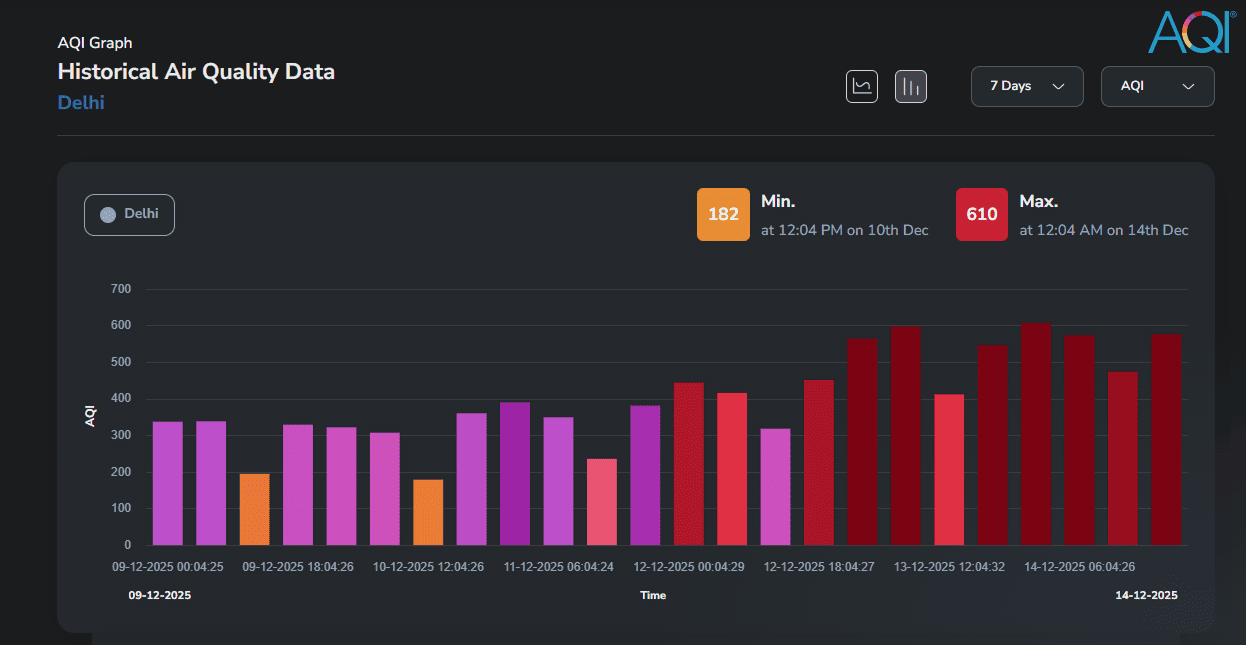
The AQI graph from AQI.in’s Historical Data Dashboard captures Delhi’s rapid slide from Very Poor to Severe over the past week, from 12th December 2025, culminating in extreme pollution on December 14. The bars turn consistently dark red in the final stretch, highlighting sustained AQI levels above 500, with the weekly maximum touching 610. Notably, there are no prolonged dips into safer categories, indicating that pollutants kept accumulating under stagnant winter weather. This visual reinforces that Delhi experienced continuous toxic exposure, not a short-lived spike.
While the city average already looked alarming, individual locations were far worse. Some of the key locations were recorded with AQI levels at 644 for Anand Vihar, 635 for Wazirpur, 560 for Mundka and 519 for Mandir Marg at around 6 AM on December 14, 2025 (Data Source : AQI.in).
These readings show how pollution was simultaneously hazardous across multiple zones, explaining the sharp loss of visibility and the need for GRAP Stage 4 emergency measures.
How Smog Is Killing Visibility
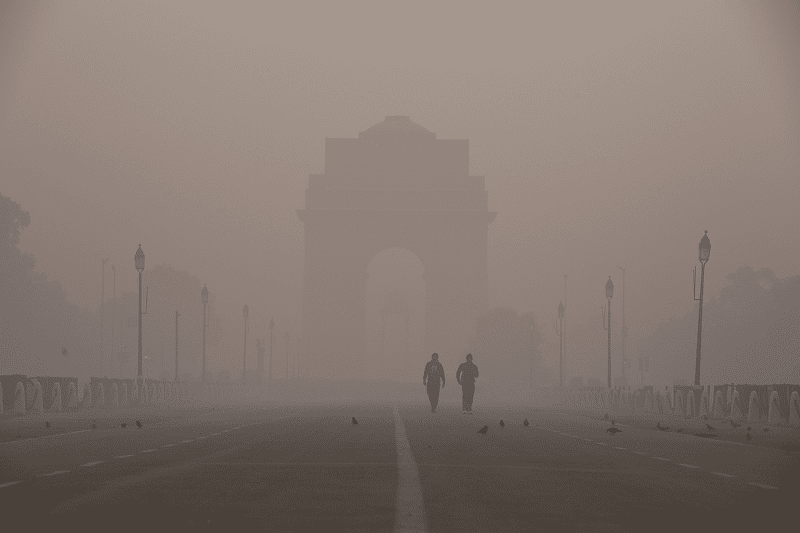
Smog forms when fine particles (PM2.5 and PM10) remain suspended in the air instead of dispersing. These particles scatter and absorb light, creating a grey haze that drastically reduces visibility. Early mornings and late nights are the worst, when pollution appears densest and visibility drops to dangerous levels for commuters and aviation.
Weather: The Pollution Trap
Delhi’s winter weather is acting like a lid:
- Temperature inversion prevents warm air from rising, trapping pollutants close to the ground
- Low wind speeds fail to disperse emissions
- Falling temperatures increase condensation around particles, thickening smog
As a result, PM2.5 and PM10 accumulate hour after hour, even if emissions don’t rise.
Why PM2.5 and PM10 Are Especially Harmful Now
- While overall AQI remains severe, PM2.5 is the primary driver of the current crisis. These microscopic particles penetrate deep into the lungs and can enter the bloodstream, increasing risks of asthma attacks, heart stress, inflammation, and long-term respiratory damage.
- PM10 levels are also elevated, contributing to throat irritation, coughing, and reduced lung function. Together, high PM2.5 and PM10 concentrations make outdoor exposure dangerous for everyone, not just vulnerable groups..
High concentrations combined with prolonged exposure make this phase particularly dangerous for children, the elderly, and those with pre-existing conditions.
GRAP Stage 4: Key Restrictions
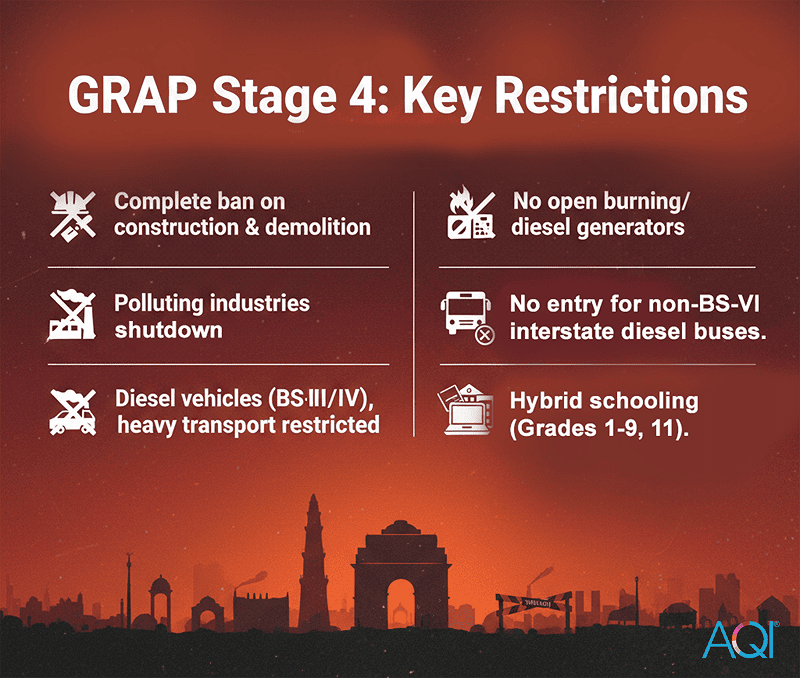
To curb further damage, authorities have enforced GRAP Stage 4, including:
- Complete ban on construction and demolition
- Shutdown of polluting industries and dust-generating activities
- Restrictions on diesel vehicles and non-essential heavy transport
- Ban on open burning and diesel generators (except emergencies)
- Entry of diesel-run medium and heavy goods vehicles restricted (except essentials)
- BS-III petrol and BS-IV diesel vehicles barred
- Non-essential interstate diesel buses not meeting BS-VI/CNG/electric norms restricted
- Open burning of waste, leaves, or biomass strictly prohibited
- Schools have been directed to conduct classes for students in Hybrid mode for grades upto class 9th and11th.
What Residents Should Do
- Avoid outdoor activities, especially exercise
- Keep windows closed during peak pollution hours
- Use masks and indoor air purifiers where possible
- Follow government advisories strictly
What This Means Going Forward
GRAP can limit new pollution, but weather-driven smog means recovery will be slow unless winds strengthen or rain arrives. Until then, reduced visibility and toxic air remain twin risks, reinforcing how tightly smog, weather, and PM2.5/PM10 pollution are now linked in Delhi’s winters.
 Rahul
Rahul Poorna Khanna
 Shakshi
 Deepshikha Deb
 Divya Singh
 Gyane Haobijam
 Nikita Kaul
 Livia Machado